




Sculpture & Aesthetics
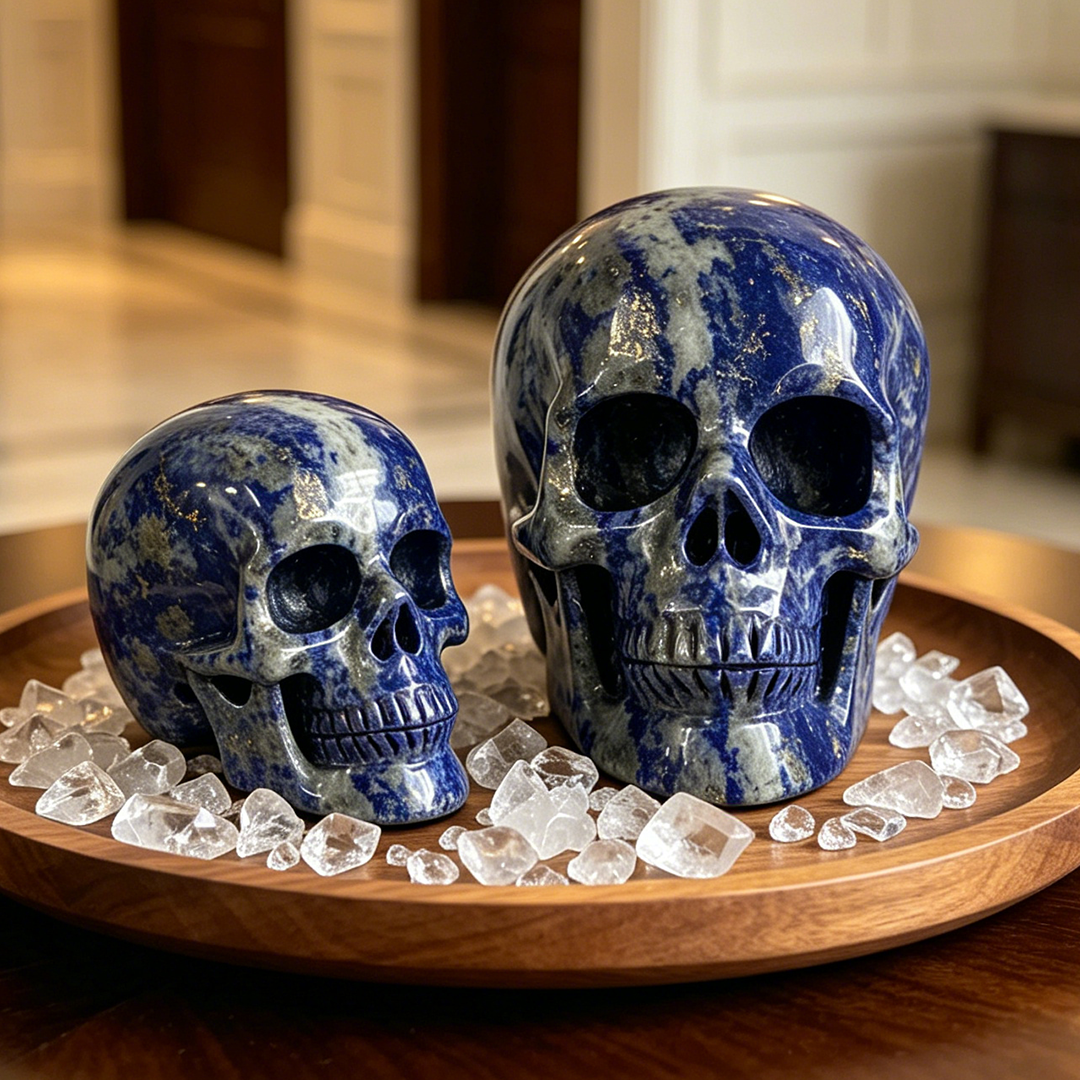
We have a soft spot for skulls. The hollow eyes, the cheekbones, that unmistakable grin. Somehow, there’s always room for another—especially when something about it catches you: the shape of the face, an unusual marking, the way it looks from one particular angle. That’s the fascination we bring to carving them.
That affection carries into the carving. We pay attention to the cheekbones, the shape of the jaw, and how the face changes as you turn it in your hand. Natural stone adds another reason to look closer: a vein crossing the brow, a change of color along the cheek, a detail you only notice after living with it for a while. We want to make the kind of skull we would stop to admire—and immediately start making room for.

Lapis Lazuli
Lapis Lazuli is a natural rock rather than a single mineral. Lazurite provides its blue color, while calcite commonly forms pale veins and pyrite appears as metallic golden flecks. Their proportions and placement vary naturally between carvings.
I believe in lapis lazuli’s energy of wisdom, truth, and communication. It is a stone I would choose when I want to understand something more deeply and find words that are honest rather than merely easy.

Details & Care
Material properties
- Surface
- Polished
- Hardness & Specific Gravity
- Mohs: 5–6
SG: approximately 2.75 ± 0.25
Natural Variation & Care
Natural veils, inclusions and variations in color are part of the material’s character. Appearance may vary with lighting and screen settings.
Protect it from scratches, impacts, acids, alcohol, acetone, and prolonged soaking. Clean gently with mild soapy water and a soft cloth, then dry promptly.
Support the carving by its main body or solid base. Protect the teeth, jaw and thin carved edges from knocks and pressure.
Shipping & Returns
Each piece is carefully packed to protect its carved surfaces during transit.