


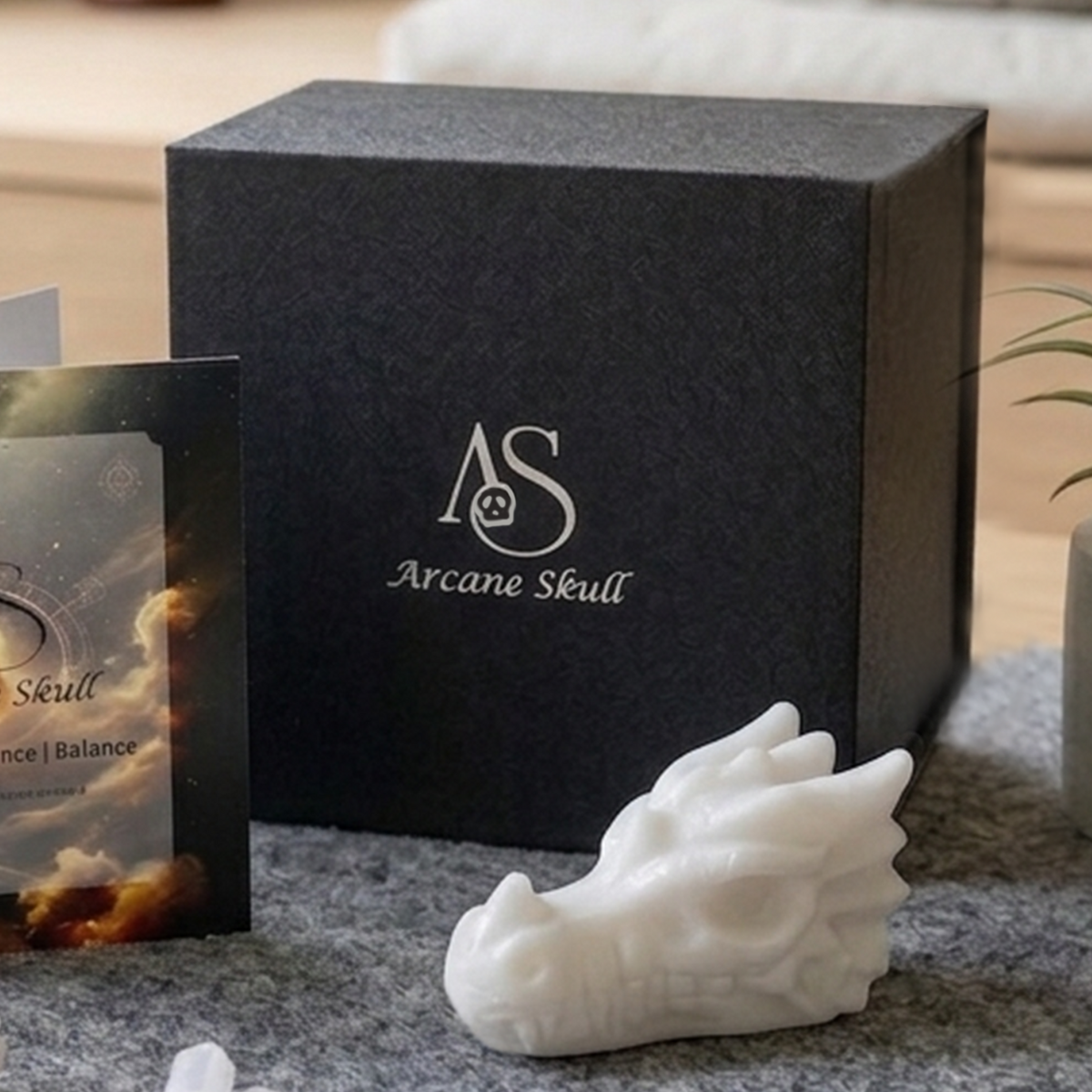

Sculpture & Aesthetics
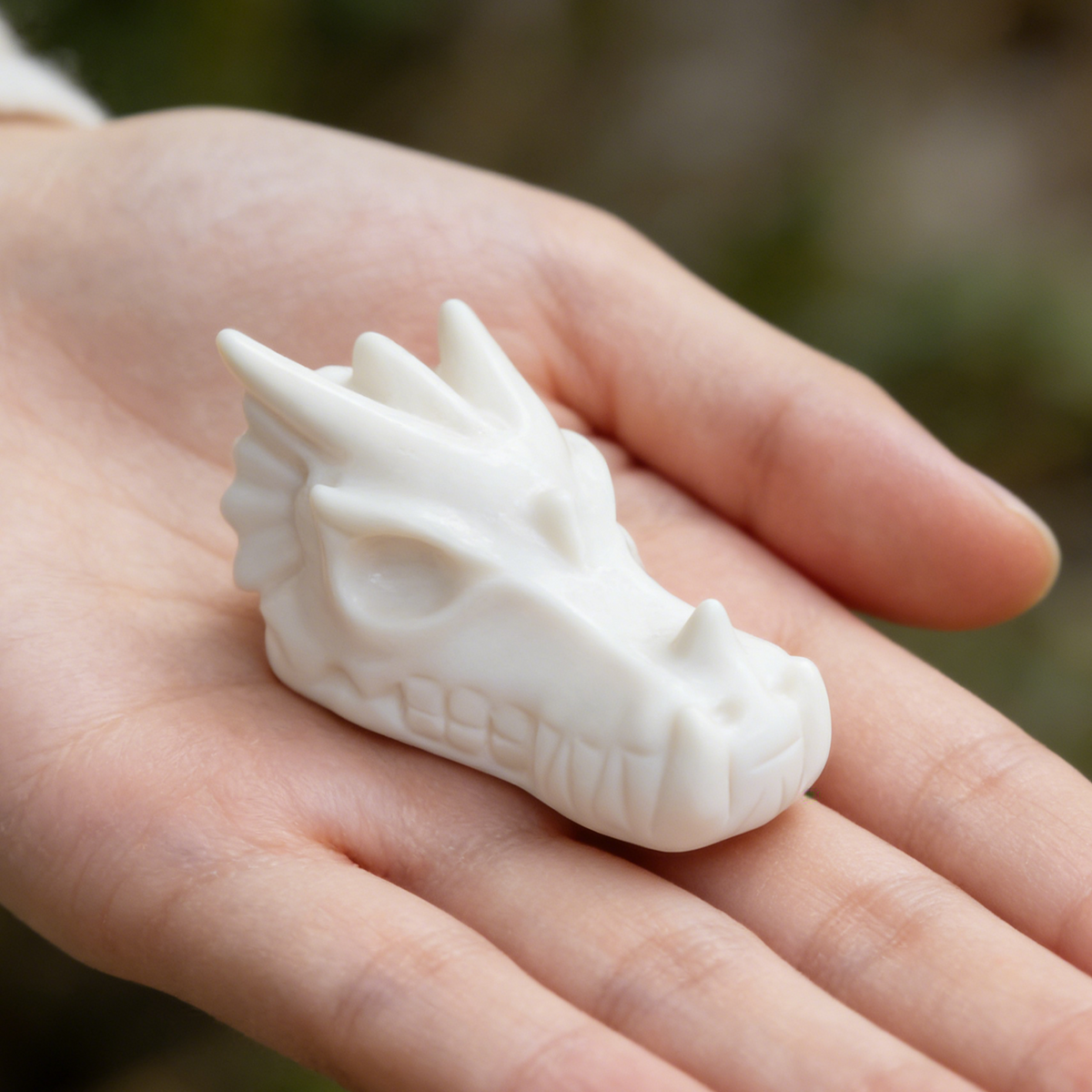
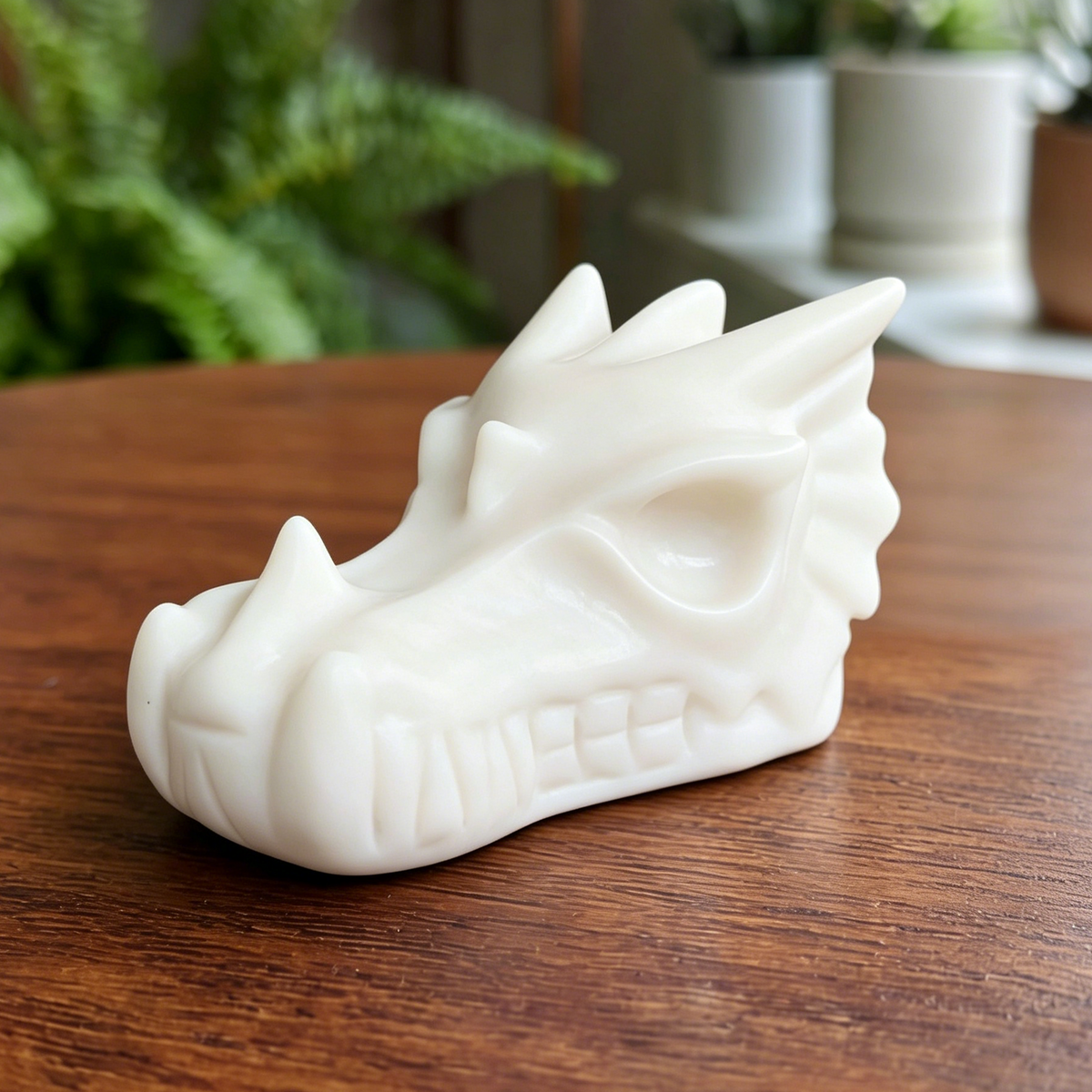
A dragon skull is the sort of thing we would happily rearrange a shelf for. There’s something irresistible about seeing an imagined creature given teeth, eye sockets, and a jaw you can follow with your fingers. You start wondering about the rest of it—how large it might have been, what those horns would have looked like on a living animal. A good skull leaves you with a creature to imagine.
That is what we enjoy working on: the long, low profile, the sweep of the horns, the plates around the eyes. We pay attention to how these parts fit together, so the head feels convincing from the side as well as the front. Deep recesses give the polished stone places to fall into shadow, while its natural markings run through the face. It has the satisfying strangeness of something you might hope to find in a very unusual natural history collection.

Ivory Jade
Ivory Jade is a non-standard trade name for an unidentified natural lapidary material and does not establish that the stone is Jadeite or Nephrite. Its cream, ivory, and pale beige appearance can be described visually, but its mineral composition and physical properties require testing.
Details & Care
Material properties
- Surface
- Polished
- Hardness & Specific Gravity
- Mohs: not verified
SG: not verified
Natural Variation & Care
Natural veils, inclusions and variations in color are part of the material’s character. Appearance may vary with lighting and screen settings.
Treat it as a sensitive unidentified material: dust with a soft cloth or wipe briefly with a slightly damp cloth and dry immediately. Avoid impacts, scratches, soaking, acids, alkaline cleaners, alcohol, acetone, heat, steam, and ultrasonic cleaning.
Take particular care around the horns, crest points, teeth, and lateral plates; support the sculpture from its solid base rather than lifting it by projecting details.
Shipping & Returns
Each piece is carefully packed to protect its carved surfaces during transit.